Pages

Showing posts with label 7AL J6. Show all posts

Monday, December 10, 2018

Summer Learning Journey

Today in Cybersmart we are doing another Summer Learning Journey activity. A few weeks back in Cybersmart, I have made a blog post about me leaving to England, so today I will be searching up what is like in England school. 

Image result for england school

In England school, some children would rather be home schooled instead of going to public school. Children's education in England is normally divided in to two separate stages. They begin with primary at age to five and lasts until age eleven. England school starts normally around 8:30 - 9am and then around 3-4pm ends. 

England school celebrates new years day, Good Friday, Easter Monday, early may, spring bank holiday, summer bank holiday and Christmas holiday. 

The England school names: Slough girls leadership academy, Spalding Bilingaul free school, St Mary's Church of England Primary School and Steiner Academy Bristol.   

Monday, December 3, 2018

Reflection - Cybersmart

Today in Cybersmart I will be reflecting on my Cybersmart journey. My teacher Miss Morgan has asked us to do a reflection about what we have been doing for the past terms in Cybersmart.

In term one we started on smart learner. We had four lessons and they are how to look after our Chromebooks, How to create a unique and strong password for your google account, what are the short cuts/which shortcut are the most effective and who owns the images online. We also had to create a DLO explaining what it means and what you have to put in it. DLO stands for digital learning object.

In term two we did a Smart footprint. We learnt how to find out information about someone else, Private information, How to vlog, Who is social media for, Steps to make a quality blog post and what is a purpose of a blog post.   

Term three we learnt about our smart relationships. Lesson 1 blog comment sentence starters. Lesson 2 we are learning to reply to blog comments. Lesson 3 tips on how to be positive, power of words, dealing with haters and trolls and color your world with kindness.

Term four we are being smart users. For the first few weeks we done the research challenge. Then we moved onto scratch coding and that was a game of drawing and coding. For the last few weeks, we have learnt about the summer learning journey.

My favourite part about Cybersmart was learning all the different things about being safe online/social media and doing so many blog posts.

My favourite thing about Cybersmart this year was that we got to make so many blog posts and getting to work in groups with our friends.

What I didn't enjoy about Cybersmart was that we didn't have a amount of time to finish our work/blog posts and staying in for lunch until we do what we have to do.

What my Cybersmart teacher did well on giving us fun work to do and explaining on what we have to do.

What I think my teacher could do better at is give enough time to finish our work and make a descent blog post.

Friday, November 9, 2018

pH scale - Science

Today in science, my class and I were doing this small quiz about pH scale. I was working together with my friend Hope and we got all of the answers right. What I have learnt about the pH scale is that vinegar is an example of a weak acid. This is the quiz we were doing, I hope you enjoy.

Tuesday, November 6, 2018

Using addition to solve subtraction - DLO


This is my DLO that I created for maths. My maths group and I were working on how to solve a subtraction question using addition. It was hard the first time I tried it but my brain clicked and I got it. I hope you enjoy my DLO.

Wednesday, October 17, 2018

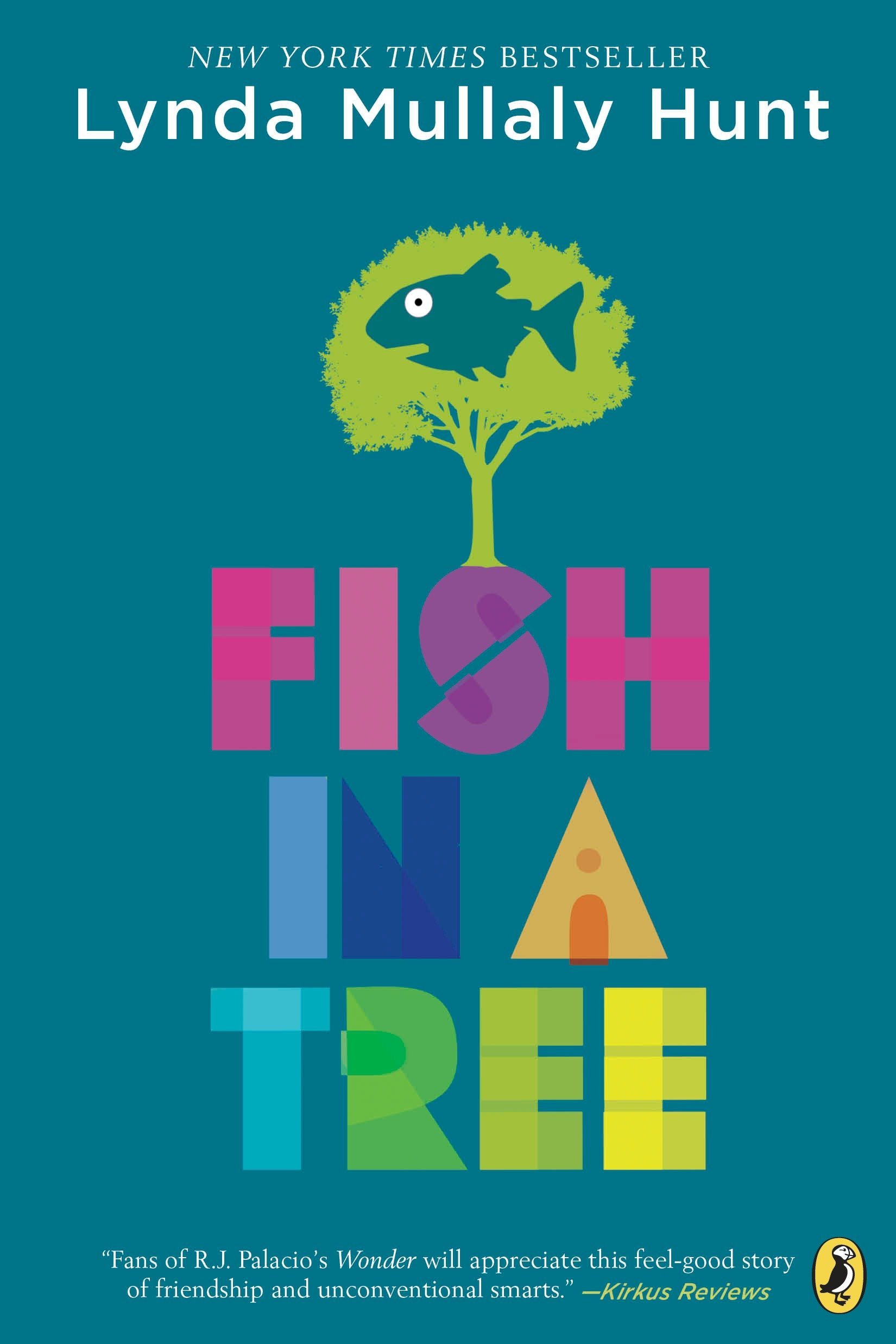
Fish in a tree - Lynda Mullaly Hunt

Through the year my class 7AL has been reading this awesome book called the Fish in a tree. It was about a girl who was in intermediate and just found out that she couldn't read and that she has diagnosed dyslexia, her name was Ally Nickerson. Ally had two friends called Keisha and Albert and was also getting bullied from 2 girls, Jessica and Shay. 
The Author who wrote this novel was Lynda Mullaly Hunt.  

Image result for lynda mullaly huntImage result for fish in a tree     


Friday, September 21, 2018

Alchemy - Science

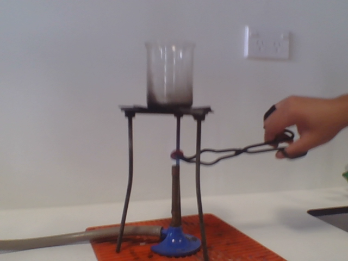
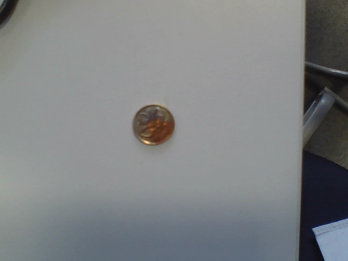
On Friday the 21st of September, in science class we did a new experience called Alchemy. I was in a group with Axle and Tukotahi. Alchemy was a old study and philosophy of how to change mental into gold. In the experiment, we used zinc nitrate solution, Zinc metal and copper/ten cent coin. We added the zinc nitrate solution in a beaker then started boiling it over orange fire. After boiling the zinc nitrate solution, we switched the fire into blue then held the coin with scissor tongs to try make the coin change to gold. 

I had fun doing the experiment but I was hoping that the coin would turn fully gold. I think we should of kept the coin over the fire for a little bit longer then the coin would of changed. 

I hope you enjoyed this.


Thursday, September 20, 2018

Orana Park Recount

Orana Park Recount

On Tuesday the 18th of September, all of the year 7s
went on a school trip.
Our location we were going to was Orana Wildlife Park.


The first animal we went to learn about was our native Kiwi.
We learnt that a Kiwi doesn’t have hollow bones in their legs,
has no tail and their wings are underdeveloped.
They also carry their babies eggs for 28 days.

A female kiwi is bigger than a male kiwi because the female has to have enough room in there belly for the baby eggs. When the kiwi’s are six weeks old, they will be leaving their mum. Kiwi have strong legs to kick predators. They’re legs aren’t hollow like birds who can fly.   
   
After the Kiwi’s, we went to learn about a native Keas. Chocolate is toxic to Keas. Never feed your food to Keas, it is not good for them. Make sure you chase a Kea off your car before you start driving because they will fall off and die or hurt their self badly.


Did you know that Spider monkeys
has a thumb print on the end of their tail and
also use their tail for balance?


Lions have the loudest roar of all wild cats.
It can be heard from 5 miles away.  


Tasmanian Devils are marsupials and carry their babies
in their pouches.
Only the strongest four survive because the mum only
has four teats to feed from.
They cling onto each others backs to be carried.  


Tigers live alone and spray to mark their territory.


Zebras are born black and then develop their white stripes.
Every Zebra has unique stripes.


Cheetahs need to rest after they hunt and sometimes their
food gets stolen by lions or hyenas.
Cheetah are the only large cat that can purr.


The oldest ape is dominant and the young apes must give
him whatever he wants.


Giraffes tongue changed colour so it doesn’t get sunburnt.
Giraffes can kick in every direction.


Rhinos eat the giraffes grass at Orana park so that the giraffes
don’t eat it and get them sick.
Rhino horn is made out of the same stuff as our hair and nails
(Keratin).


Water buffalo love to swim in water, but hide from the rain.


Orangutan place bags above their heads to keep them cool and
safe from the sun.   

I hope you learnt something about these awesome animals.

Monday, September 17, 2018

Growth mindset vs Fixed mindset


Today in philosophy, my group Hope and Addyson have been creating a DLO about a growth mindset and a Fixed mindset. It was challenging to create the DLO because we had to think really hard for information and we just started that day. We hope you enjoyed and hope you have learnt something from this.

Friday, September 14, 2018

Ice Experiment


  Ice Experiment


Today in science we were doing an ice experiment. It was a mixture of water, ice cubes and salt. We also used a match and a beaker. 
I was in a group with Hope and Ranit. The challenging thing about the experiment was when we had to try to stick the match onto the ice cube and try to pick it up, and also trying to take pictures while doing the experiment. The matchstick stuck onto the ice cube because the ice cube refreezes and freezes the matchstick in place. My group and I enjoyed doing the experiment and really found it interesting. 

Why do we put salt on icy roads?
So it can stop water, rain and snow from freezing. Salting icy roads and walkway lowers the freezing points of the water.      

Geometry knowledge


This is my slideshow about my knowledge about Geometry. Geometry is a type of math that can be complicated and also fun to learn. I hope you enjoy and learn something from this.  

Friday, September 7, 2018

Elephant's toothpaste

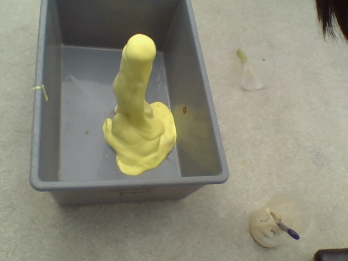
This Friday in science we learnt how make Elephant toothpaste. I was in a new group with Axle and Jeff. Basically, it is a mixture of Hydrogen peroxide, Dish washer liquid, food coloring and dry yeast. The reaction was caused  by rapid decomposition of hydrogen peroxide making use of yeast as the catalyst. The interesting part of the experiment was when the yeast mixing together with the hydrogen peroxide and dish washing liquid. 

Here are some photos that we took:


Elephant’s Toothpaste          7.9.2018
Resources:
  • Safety glasses
  • A cylinder
  • Rubber gloves
  • A tote tray to protect the bench from damage
  • 120ml Hydrogen Peroxide 6%  
  • Dishwash liquid
  • Dry yeast
  • Food colouring
  • Funnel
  • Tablespoon
  • Beaker
Procedure:
  1. Put on your gloves and goggles.
  2. Put a tote tray on the bench and put your cylinder in the tote tray, with the funnel in the top.
  3. Ask the teacher to pour the hydrogen peroxide into your cylinder (via the funnel).
  4. Add 10 drops of food colouring to the cylinder (via the funnel).
  5. Add a tablespoon of dishwash liquid to the bottle (via the funnel).
  6. Swirl your cylinder around to mix everything together.
  7. In a beaker, mix a tablespoon of dry yeast with 3 tablespoons of warm water and stir for 30 seconds.
  8. Pour the yeast mixture into the cylinder (via the funnel).
  9. Stand back and watch the chemical reaction!
  10. Pour the mixture down the drain afterwards and wash out the cylinder.
Scientific Explanation (How it works):
The yeast and water mixture acts as a catalyst - something that speeds up a chemical reaction in another substance, while remaining unchanged itself. When you add this to the cylinder it makes the hydrogen peroxide break down into oxygen and water. The dishwashing liquid traps the oxygen in bubbles to create the foam. Just a small amount of hydrogen peroxide will create a lot of oxygen, so you get loads of bubbles - making your ‘toothpaste’ almost explode out of the cylinder.
Extra for experts:
  1. Is your cylinder warm after the experiment? Why? The cylinder was warm because of the chemical reaction which produced energy in the form of heat.

Tuesday, September 4, 2018

Commenting challenge


This is my blog post I did in Cybersmart about the commenting challenge I am doing with my class and another class. I was explaining to you guys how to comment on someone's blog if you didn't already know. I hope you enjoy and please leave a comment.

Tuesday, August 21, 2018

Wizard wand - Kete


This is my friend and I's advertisement we did on a google slide. We did this in kete and had to present it in front of our class. I was very nervous but once I got into it, I was happy. 

Our product was a wizard wand and it was fun pretending to convince people to buy one. Hope you enjoy:)   

Friday, August 17, 2018

Equipment in science

Today I am going to show you all the equipment in science in sentences. Hope you enjoy. 

  
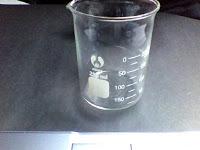
Beaker: A beaker is used for holding liquid. 


Measuring cylinder: A measuring cylinder is used to measure volumes of liquids.


Test tube tongs: A Test tube tongs are used to hold test tubes.


Spatula: A spatula is used for scooping powder.


Stirring rod: A Stirring rod is used for stirring chemicals.


Dimple tray: A dimple tray is used for watching (observing) chemicals change.


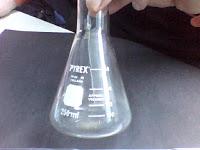
Conical flask: A conical flask is used for mixing liquid.


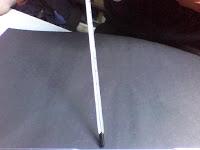
Thermometer: A thermometer is used for measuring the temperature of a liquid.


Tripod: A tripod is used for holding a beaker/ flask above a flame.


Bunsen burner: A Bunsen burner is used for heating experiments.


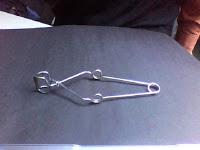
Scissor tongs: A scissor tong are used for holding hot objects.


Gauze mat: A gauze mat is used to evenly spread a flame under a beaker.


Heat mat protect: A heat mat protects the bench from burning.